Weston, CO Hail Storm – May 2026
May 28, 2026 hail storm near Weston, CO. Radar-confirmed hail track and contractor lead lists available.
Max Hail
3"1.98" est.
confirmed
Zones
4
NWS alerts
Radar
5,845
dual-pol hits
Spotter
2
field reports
NWS WARNING AREA · Weston Metro · May 28, 2026
Intelligence Platform
StormSnipe Pro
$49/ mo
Cancel anytime · No contracts
›All 50 states
›No zone limits
›No per-event fees
Subscribe to Pro
Pro renews monthly until canceled · Cancel anytime in the billing portal
What's included
Instant delivery
Every storm published within hours of NOAA confirmation.
Interactive Strike Map
Full radar-confirmed hail track on an interactive map.
Address CSV export
Every affected residential address, export-ready.
Smart alerts
Notified when a storm hits your area. Set zones once.
Nationwide coverage
All 50 states. No zone restrictions. No geographic caps.
Live pipeline
NOAA NEXRAD processed and delivered 24/7.
Address data notice
Pro coverage in California, Vermont, and Oregon includes the confirmed hail track and Strike Map only — no address lists. State data-privacy law treats compiled address lists differently in those three states, so we exclude their addresses from extraction and delivery.
NWS WARNING AREAS · 4
This storm generated 4 NWS alert zones. Pro access covers the complete storm track and all addresses across every zone.
ZONE 1NWS COC071
Weston, CO
Dual-Pol Radar
559 addresses in warning area
Alert issued Thu, May 28 · 10:15 PM UTC
2.25"
confirmed
1.47"
est. (NWS)
ZONE 2NWS NMC059
Folsom, NM
Dual-Pol Radar
42 addresses in warning area
Alert issued Thu, May 28 · 11:41 PM UTC
3"
confirmed
1.91"
est. (NWS)
ZONE 3NWS NMC059
Des Moines, NM
Dual-Pol Radar
2 addresses in warning area
Alert issued Fri, May 29 · 12:10 AM UTC
3"
confirmed
1.71"
est. (NWS)
ZONE 4NWS COC089
Fowler, CO
Dual-Pol Radar
84 addresses in warning area
Alert issued Fri, May 29 · 2:09 AM UTC
2"
confirmed
1.98"
est. (NWS)
A severe hail storm tracked through Weston, CO on May 28, 2026, producing stones up to 1.98 inches and multiple radar-detected hail alerts from late afternoon into the evening.
What Happened
The event began in the late afternoon and produced a series of radar-detected hail signatures and NWS alerts over a four-hour span. The first alert issued at 4:15 PM MDT indicated 1.47-inch hail detected by dual-polarization radar. A stronger pulse produced a 1.91-inch radar detection at 5:41 PM MDT. A subsequent alert at 6:10 PM MDT showed a 1.71-inch radar signature. The final alert at 8:09 PM MDT recorded the largest radar-detected stones at 1.98 inches.
Surface observations during the event corroborated radar returns. An mPING submission from a local observer at 6:30 PM MDT reported ping-pong ball–size hail, recorded as 1.50 inches, and was spotter-verified by the National Weather Service local storm report. The spotter note matches the mid-event radar pulse near early evening and provides ground-truth for at least one area within the Weston metro footprint.
Radar reflectivity images show intermittent convective pulses moving across the Weston metro area from late afternoon into the evening. The alert timestamps track discrete intensifications rather than a single continuous hail core. Local storm reports are limited to the mPING observation; no additional spotter-verified impacts were logged in the public local storm report stream for Weston on May 28.
Damage Assessment
Field observations and the local storm report indicate surface impacts near central Weston neighborhoods around 6:30 PM MDT. The spotter-verified 1.5-inch report is the only direct surface impact recorded in the public LSR feed for this storm within the Weston metro. Radar continued to detect larger hail signatures later in the evening, but no further ground-level reports were filed to confirm those detections reached the surface in Weston.
Because recorded ground impacts were limited, reported damage in Weston remains localized to the area of the spotter observation. No additional local storm reports of structural failure, large-scale property loss, or widespread tree damage were logged in the NWS reports for this event. Insurance or contractor claim records tied to this specific storm were not part of the public record used here.
What Contractors Should Know
Schedule initial exterior inspections in neighborhoods where the mPING report was recorded and in adjacent blocks that lay along the late-afternoon to evening storm track. Start with photographed perimeter checks of vehicles, exposed air-conditioning units, and collectible or soft-metal trim. Use the 6:30 PM MDT spotter report as a timing anchor when interviewing homeowners about when they first observed hail.
When documenting, include a scale reference and note the spotter-verified 1.5-inch observation in every claim packet for properties within the observed impact area. If you find point damage to shingles, vents, siding, or vehicle panels, record detailed photos with timestamps and GPS coordinates. Log differences between visible surface damage and nearby undamaged surfaces to support a concentrated-impact pattern in claim narratives.
Storm Details
- Start Date
- Thursday, May 28, 2026
- Last Activity
- Thursday, May 28, 2026
- Location
- Weston, CO
- Warning Areas
- 4
- Dual-Pol Radar
- 5,845
- Spotter Reports
- 2
Preview Strike Map
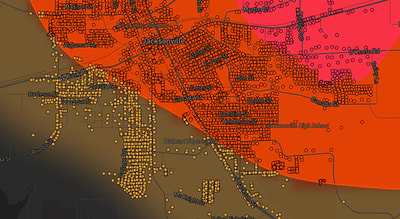
See exactly what you get.
Explore the full Springdale, AR Strike Map free – hail track, address overlay, and CSV download. No account required.
Try the Free Demo →