Murdo, SD Hail Storm – June 2026
June 3, 2026 hail storm near Murdo, SD. Radar-confirmed hail track and contractor lead lists available.
Max Hail
3"2.48" est.
confirmed
Zones
18
NWS alerts
Radar
8,837
dual-pol hits
Spotter
20
field reports
NWS WARNING AREA · Murdo Metro · Jun 3, 2026
Intelligence Platform
StormSnipe Pro
$49/ mo
Cancel anytime · No contracts
›All 50 states
›No zone limits
›No per-event fees
Subscribe to Pro
Pro renews monthly until canceled · Cancel anytime in the billing portal
What's included
Instant delivery
Every storm published within hours of NOAA confirmation.
Interactive Strike Map
Full radar-confirmed hail track on an interactive map.
Address CSV export
Every affected residential address, export-ready.
Smart alerts
Notified when a storm hits your area. Set zones once.
Nationwide coverage
All 50 states. No zone restrictions. No geographic caps.
Live pipeline
NOAA NEXRAD processed and delivered 24/7.
Address data notice
Pro coverage in California, Vermont, and Oregon includes the confirmed hail track and Strike Map only — no address lists. State data-privacy law treats compiled address lists differently in those three states, so we exclude their addresses from extraction and delivery.
NWS WARNING AREAS · 18
This storm generated 18 NWS alert zones. Pro access covers the complete storm track and all addresses across every zone.
ZONE 1NWS SDC075
Murdo, SD
Dual-Pol Radar
1 addresses in warning area
Alert issued Wed, Jun 3 · 10:00 PM UTC
1.82"
confirmed
1"
est. (NWS)
ZONE 2NWS SDC075
Vivian, SD
Dual-Pol Radar
1 addresses in warning area
Alert issued Wed, Jun 3 · 10:40 PM UTC
2.75"
confirmed
1.5"
est. (NWS)
ZONE 3NWS SDC095
Wood, SD
Dual-Pol Radar
1 addresses in warning area
Alert issued Wed, Jun 3 · 11:02 PM UTC
3"
confirmed
1.8"
est. (NWS)
ZONE 4NWS SDC085
Presho, SD
Dual-Pol Radar
Alert issued Wed, Jun 3 · 11:29 PM UTC
1.75"
confirmed
1.75"
est. (NWS)
ZONE 5NWS SDC095
Hamill, SD
Dual-Pol Radar
21 addresses in warning area
Alert issued Wed, Jun 3 · 11:35 PM UTC
3"
confirmed
1.75"
est. (NWS)
ZONE 6NWS SDC075
Presho, SD
Dual-Pol Radar
Alert issued Wed, Jun 3 · 11:46 PM UTC
1.25"
confirmed
1"
est. (NWS)
ZONE 7NWS SDC123
Hamill, SD
Dual-Pol Radar
3 addresses in warning area
Alert issued Thu, Jun 4 · 12:03 AM UTC
3"
confirmed
2.48"
est. (NWS)
ZONE 8NWS SDC085
Reliance, SD
Dual-Pol Radar
Alert issued Thu, Jun 4 · 12:26 AM UTC
1.75"
confirmed
1.75"
est. (NWS)
ZONE 9NWS SDC123
Hamill, SD
Dual-Pol Radar
Alert issued Thu, Jun 4 · 12:41 AM UTC
3"
confirmed
2.3"
est. (NWS)
ZONE 10NWS SDC015
Kimball, SD
Dual-Pol Radar
Alert issued Thu, Jun 4 · 12:51 AM UTC
2"
confirmed
1"
est. (NWS)
ZONE 11NWS SDC015
Chamberlain, SD
Dual-Pol Radar
Alert issued Thu, Jun 4 · 12:56 AM UTC
2.14"
confirmed
1.02"
est. (NWS)
ZONE 12NWS SDC123
Winner, SD
Dual-Pol Radar
27 addresses in warning area
Alert issued Thu, Jun 4 · 1:06 AM UTC
1.75"
confirmed
1.09"
est. (NWS)
ZONE 13NWS SDC085
Iona, SD
Dual-Pol Radar
Alert issued Thu, Jun 4 · 1:10 AM UTC
3"
confirmed
1.75"
est. (NWS)
ZONE 14NWS SDC023
Gregory, SD
Dual-Pol Radar
Alert issued Thu, Jun 4 · 1:16 AM UTC
0.5"
confirmed
1"
est. (NWS)
ZONE 15NWS SDC003
Kimball, SD
Dual-Pol Radar
Alert issued Thu, Jun 4 · 1:34 AM UTC
2.5"
confirmed
1.27"
est. (NWS)
ZONE 16NWS SDC003
Plankinton, SD
Dual-Pol Radar
Alert issued Thu, Jun 4 · 2:11 AM UTC
2"
confirmed
0.75"
est. (NWS)
ZONE 17NWS NEC031
Valentine, NE
Dual-Pol Radar
54 addresses in warning area
Alert issued Thu, Jun 4 · 2:20 AM UTC
2.25"
confirmed
1.96"
est. (NWS)
ZONE 18NWS SDC035
Fulton, SD
Dual-Pol Radar
Alert issued Thu, Jun 4 · 2:45 AM UTC
1.07"
confirmed
0.75"
est. (NWS)
Murdo, SD experienced a concluded hail-producing storm on June 3, 2026, in the early evening. The event produced multiple radar-detected large cores and one spotter-verified hail report.
What Happened
The storm moved across the Murdo metro beginning in the late afternoon and continuing into the late evening. Eighteen separate NWS alerts were issued for the system, starting at 5:00 PM CDT and continuing through a final advisory at 9:45 PM CDT. Many of the alerts were based on dual-polarization NEXRAD hail detection. One alert at 7:26 PM CDT was spotter-verified, aligning with radar-detected cores earlier in the evening.
Radar-detected hail cores appeared in multiple rounds. Early advisories around 5:00–6:30 PM CDT reported 1.0–1.8 inch hail class signatures from NEXRAD. A series of stronger radar cores crossed the area in the early evening; the most intense radar core passed near Murdo shortly after 7:00 PM CDT. Later returns included additional large cores near 7:40 PM CDT and a renewed radar-detected core around 9:20 PM CDT. Several NWS warning-only alerts supplemented the radar-derived sequence, indicating observed threat guidance from local forecasts during the event.
Damage Assessment
Observed and radar-detected hail sizes during the Murdo event spanned a range that includes both cosmetic and structural risk categories. Multiple radar cores exceeded one inch in diameter and produced repeated impacts over portions of the metro. Hail in the 1.0–1.75 inch range commonly causes vehicle denting and accelerated shingle wear when repeated. Hail above roughly 1.5 inches has a higher likelihood of shingle fracture and broken skylights on exposed surfaces.
Field reports in the alert stream include a spotter-verified hail report near Murdo at 7:26 PM CDT coincident with a strong radar return. The alert sequence does not include widespread, geocoded damage reports tied to individual addresses. Inspectors should anticipate localized strike clusters where radar cores crossed developed areas, rather than uniform coverage across the entire warning area.
What Contractors Should Know
Prioritize inspections on properties along the late-evening radar cores and the spotter-verified location. Start with vehicle fleets, exposed HVAC units, and south- and west-facing roof slopes that received multiple radar cores. Document all findings with date- and time-stamped photos that include a size reference and the GPS coordinates when possible. Note accumulated granular loss, split or missing shingles, denting patterns on metal components, and any cracked glazing.
For estimating repair scope, treat repeated 1.0–1.75 inch impacts as likely candidates for shingle replacement or partial overlay depending on roof age and warranty. For properties that align with larger radar cores or the spotter-verified location, escalate to full roof surveys and consider temporary tarps for actively leaking roofs. Consolidate inspection notes by street or by the NWS warning area polygon to match claims distribution during contractor invoicing and scheduling.
Storm Details
- Start Date
- Wednesday, June 3, 2026
- Last Activity
- Wednesday, June 3, 2026
- Location
- Murdo, SD
- Warning Areas
- 18
- Dual-Pol Radar
- 8,837
- Spotter Reports
- 20
Preview Strike Map
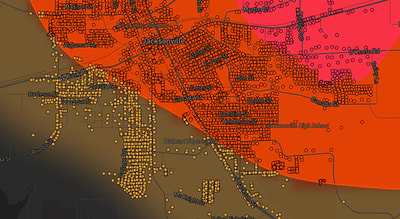
See exactly what you get.
Explore the full Springdale, AR Strike Map free – hail track, address overlay, and CSV download. No account required.
Try the Free Demo →